DOG, MIRROR AND FAMILY PORTRAIT, GALLERY MANIFESTO
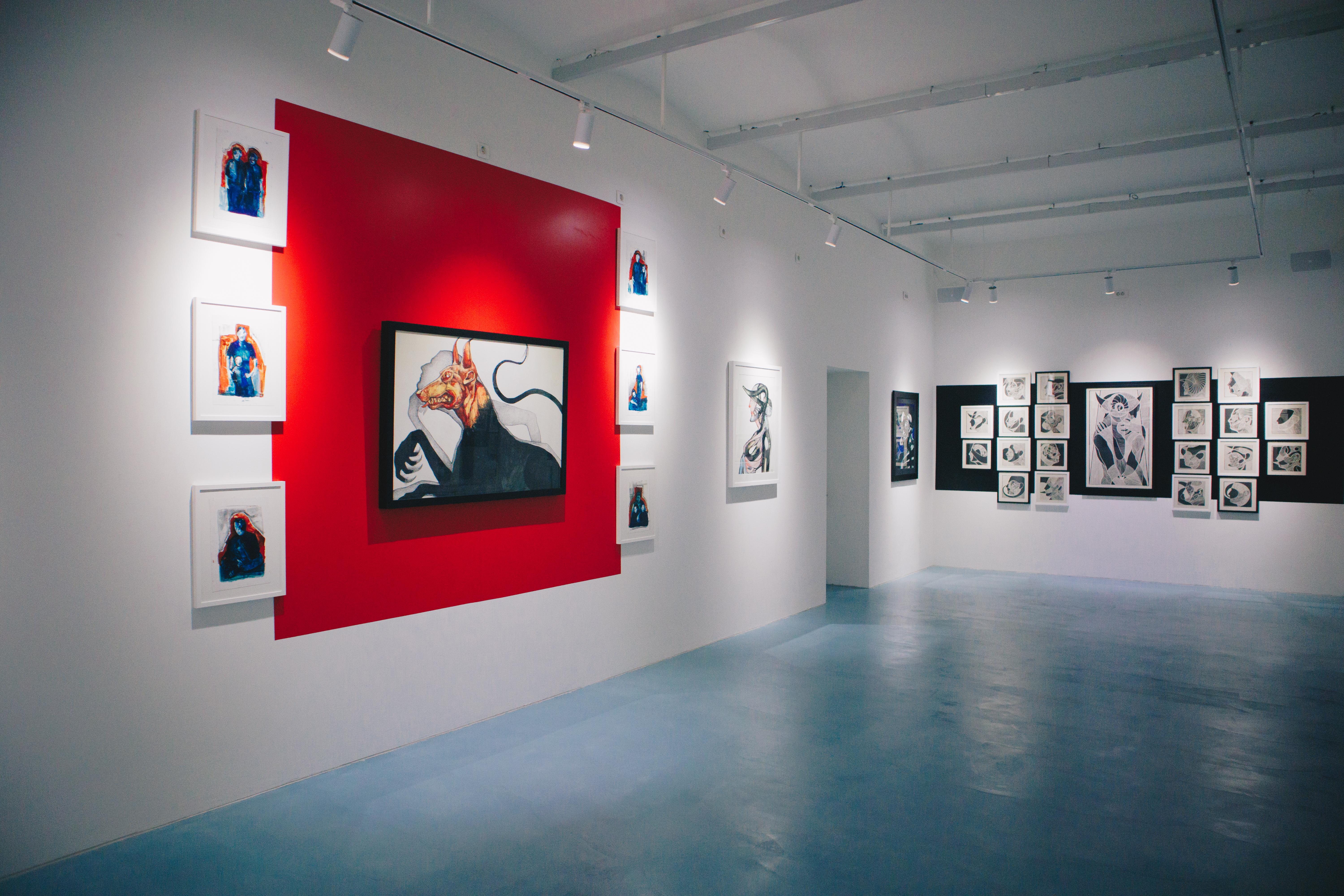
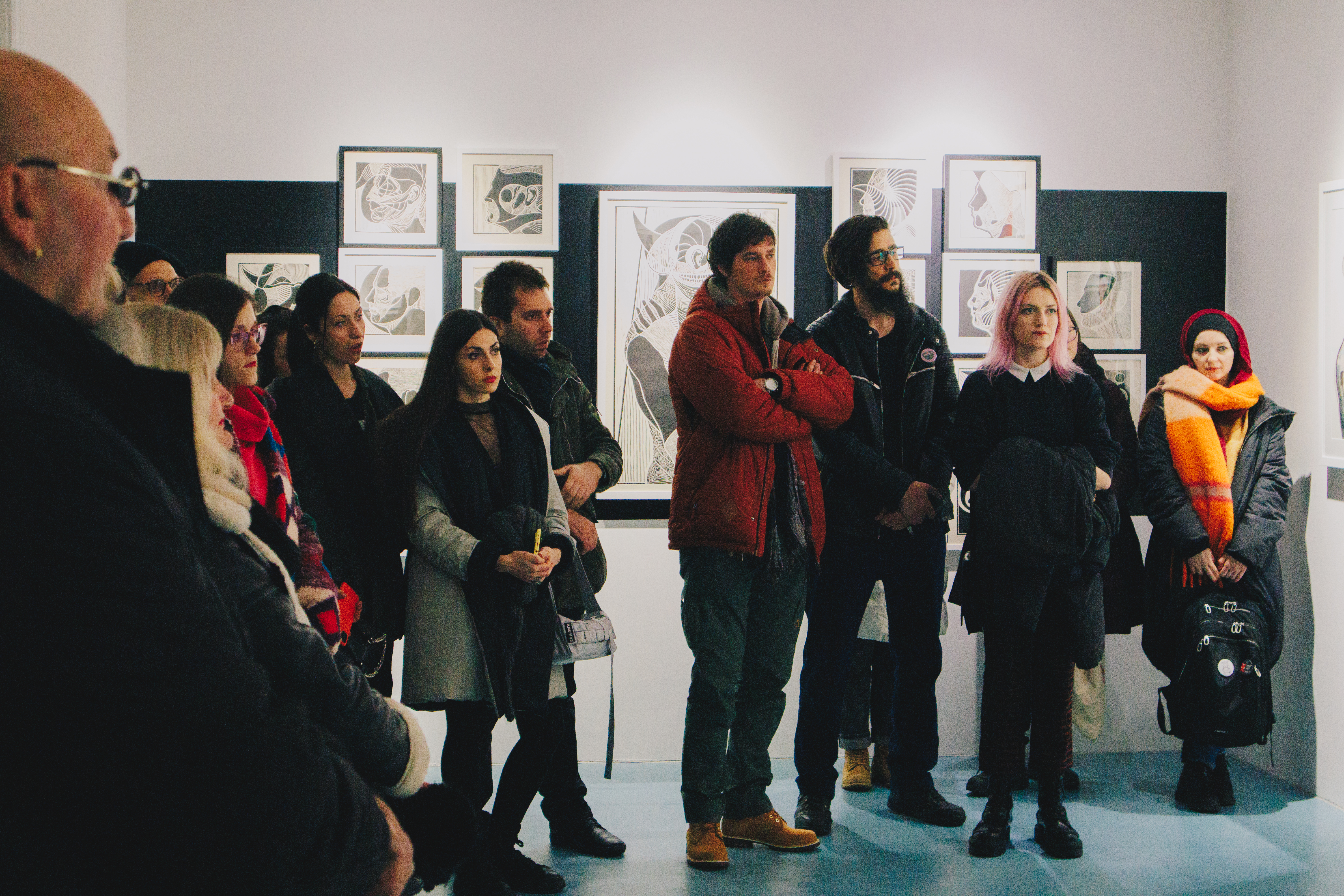
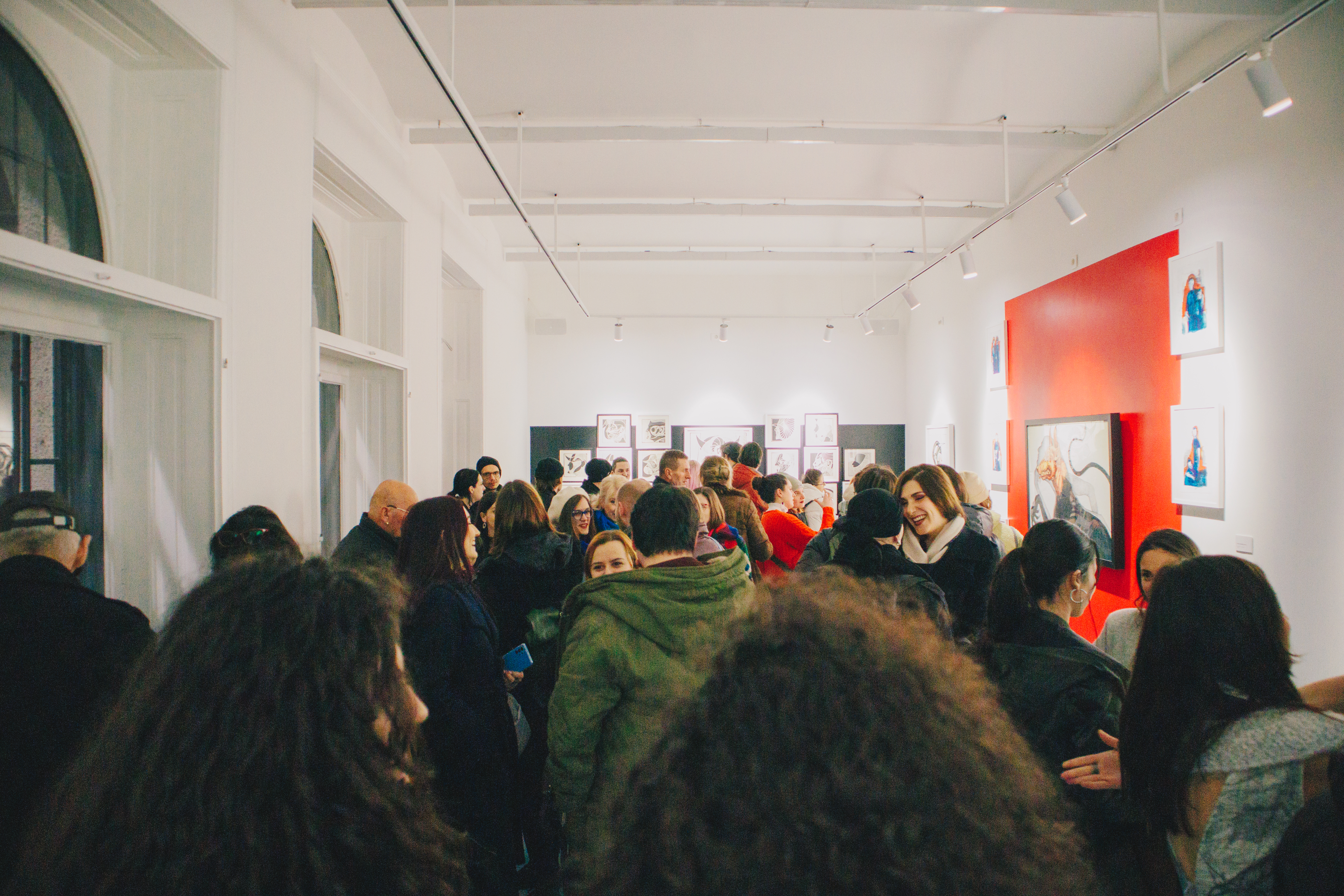
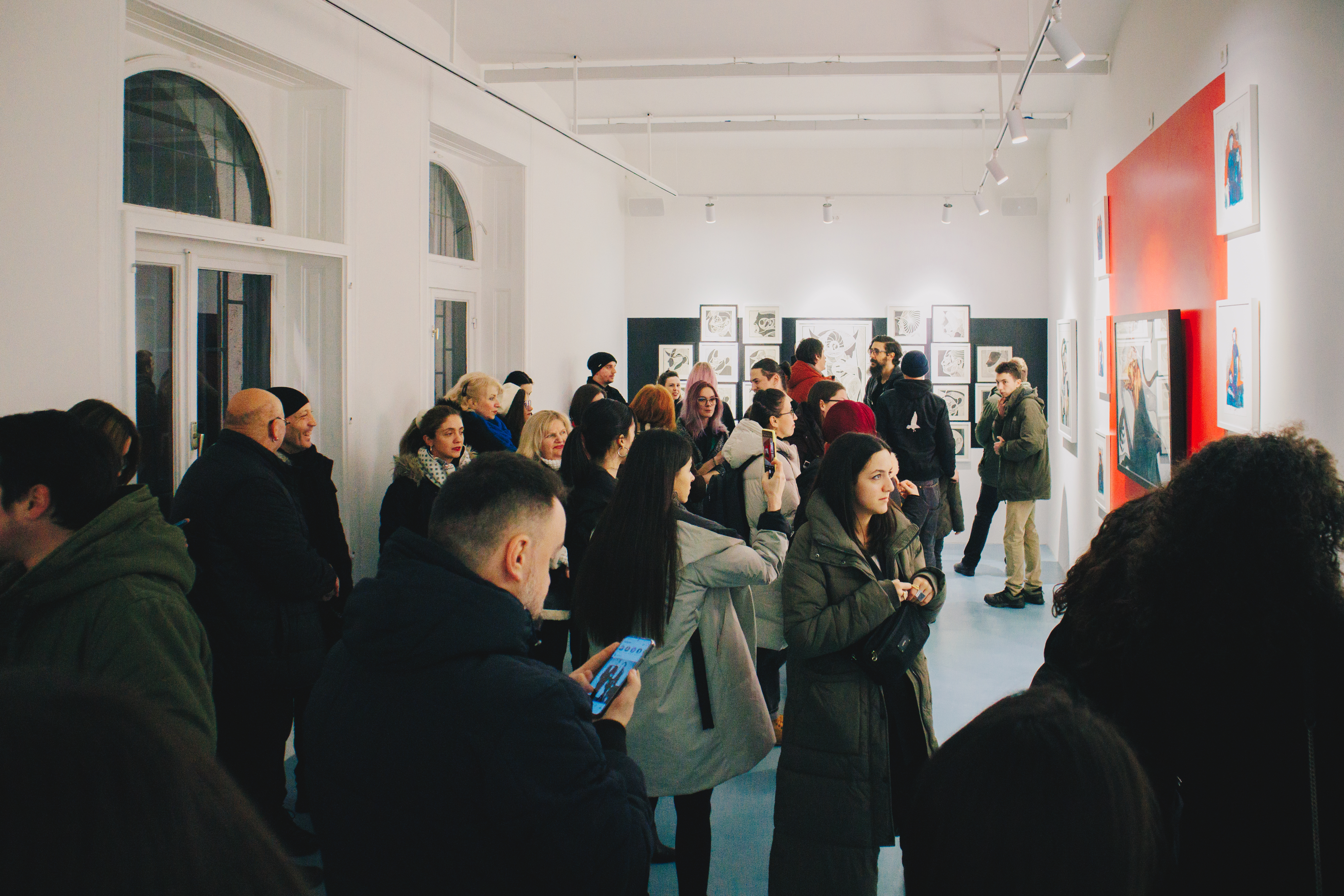
Curated by Adna Muslija and opened at the Manifesto Gallery for Contemporary Arts in January 2023, “Dog, mirror and family portrait” is a multimedia exhibition combining new and different approaches to style, medium and visual interpretation in the work of Denis Haračić.
The exhibition consisted of three distinct sections, encompassing a total of 52 artworks displayed in the exhibition space of Gallery Manifesto. The artist succeeded in finding a common thread between works that differ in both theme and technique, bringing them together through shared ideas of intimacy, self-reflection, and humanity.
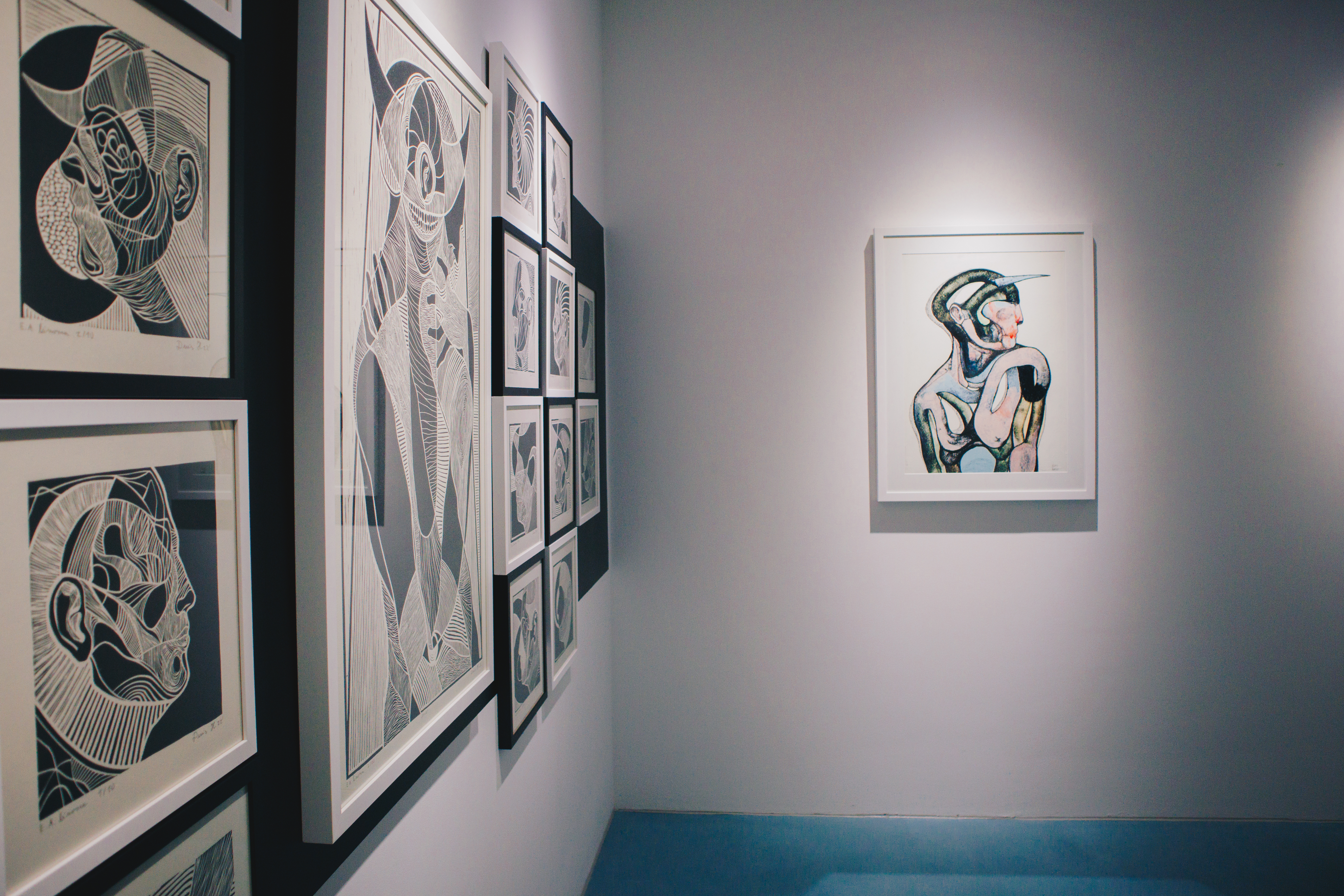
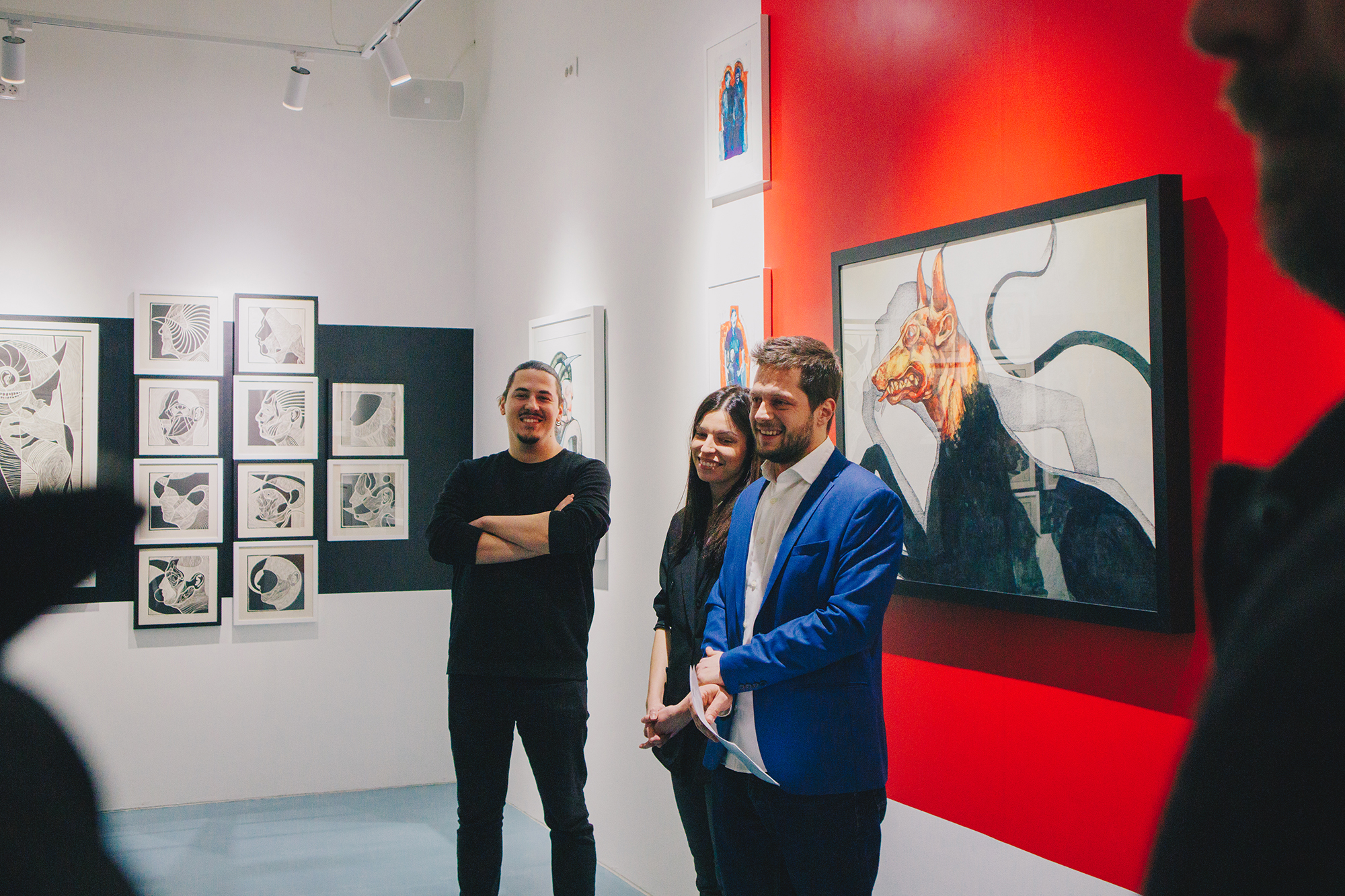
Visually, the exhibition encompasses a broad spectrum of artistic expression, ranging from black-and-white linocuts and illustrative allegorical paintings on paper to layered, vibrant, and expressive paintings on canvas. Through an unprecedented diversity of paintings, prints, and drawings, many of which had not previously been exhibited, Haračić presented the creative potential of his artistic practice.
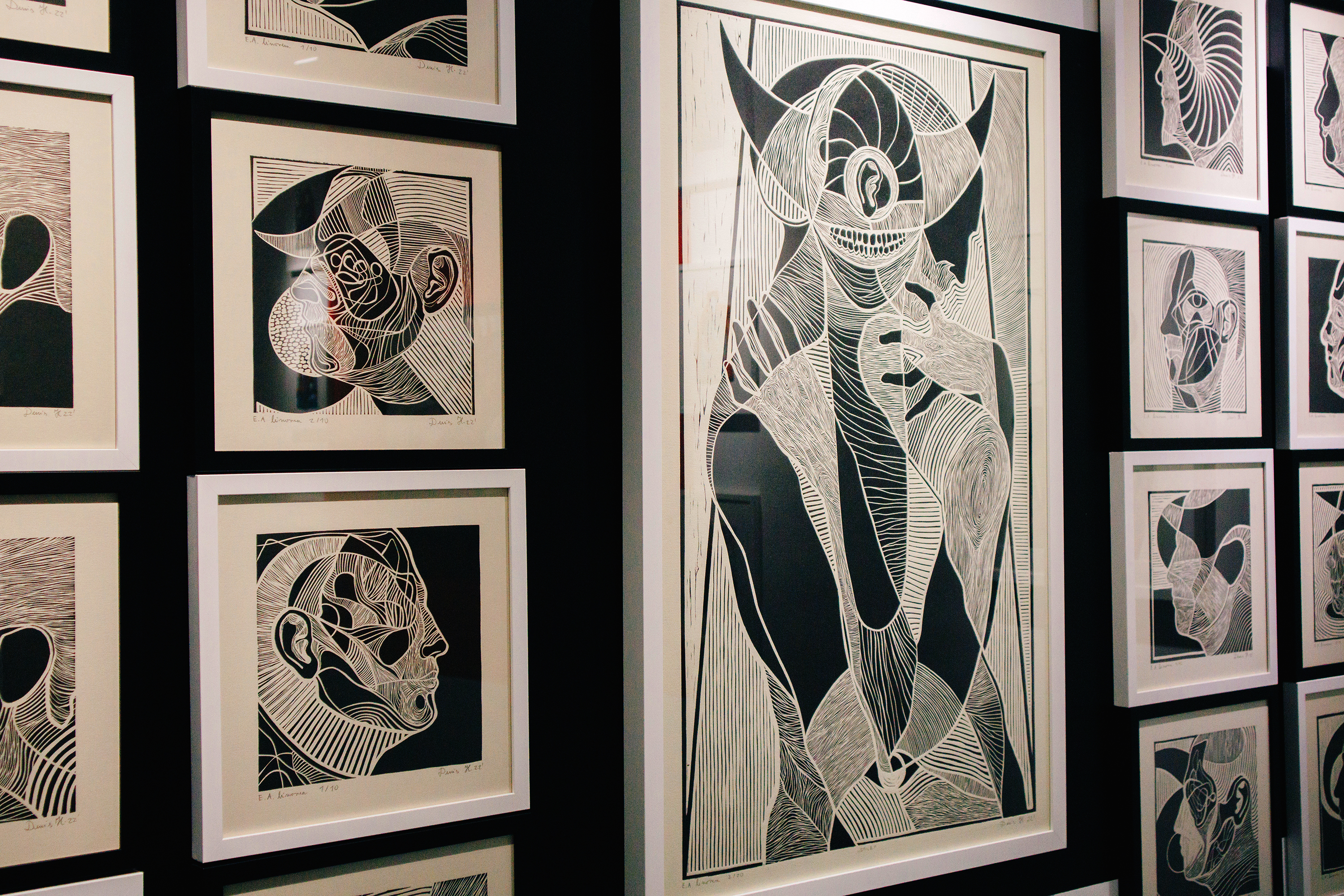
Among the works, particular attention should be given to the series titled “The Mirror”, which consists of two opposing arrangements within the exhibition space, each featuring a series of twenty-one self-portraits executed in linocut. This black-and-white installation, which emphasizes the concepts of repetition and mirroring, differs significantly in style from the other, more colourful works. The bold linework and precise cuts of each linocut matrix create a geometric labyrinth, inviting viewers to closely examine the intricate details contained in every print. With “The Mirror”, Haračić was also nominated as a finalist for the Zvono Award for Young Artists in Bosnia and Herzegovina.
The Dog, the Mirror, and the Family Portrait
The Constitution of Narrative Identity Through the Image
Tekst by Adna Muslija
He carried an old photograph in his wallet. In it, a woman and two boys. Around them, an empty landscape. Unfamiliar, yet familiar. Present, yet absent. As if they had been photographed by the very spirit of the past, with the desire to mark the end of a beginning and the beginning of an end.
That piece of paper chafed against him every time he unknowingly uttered the words “I am…”
In his Hermeneutics of the Image, Gottfried Boehm understands the search for the meaning of an image primarily as a continuous translation of “the visual experience of the eye into the medium of language.” The task of a curator and an art historian would therefore entail a dance along the boundary between these two media. Mediation between image and word is a seductively rhythmic play, moving to the beat of syntax and the melody of the image. At times, the melody is quieter and the beat faster: the visual, in its deliberate restraint, seeks, entices, and simply gives birth to inexhaustible springs of words. At other times, the distinctiveness of the melody makes the beat elusive: the visual transcends every linguistic experience and expression.
Denis Haračić’s series of linocuts and paintings speaks through a visual language that is at times restrained and at times distinctive, establishing what Ricœur calls the hermeneutic circle—the path along which being “moves in order to return to itself.” However, in the context of Haračić’s practice, Ricœur’s hermeneutics of the self opens up an intriguing dialogue with Boehm’s hermeneutics of the image, ultimately initiating a discussion on the limits of mediation between image and word, as well as on the role of the image and the visual in the constitution of narrative identity as the outcome of self-knowledge.
In Aesop’s fable “The Dog and Its Reflection,” a dog carrying a large bone in its jaws crosses a small bridge and catches sight of its reflection in the water. Mistaking its reflection for another dog whose bone is larger than its own, it drops its bone, snarls, and falls into the water.
Like Aesop’s dog, the artist Denis Haračić gazes into his own reflections, plunges into the depths, resurfaces, loses himself, and finds himself again, asking the question: How do we preserve ourselves and the bone that life has given us? Yet Haračić’s intimate search for what the bone fundamentally represents, and for ways to preserve it, undergoes a formal metamorphosis. Just as Ricœur emphasizes that the self is not given but attained through stories, Haračić begins his journey of self-discovery through an inward, psychological, and emotional retelling of episodes from his life. This same intimate search subsequently finds its visual expression and, once presented to the public, gains the opportunity to be completed, like any other text.
In other words, the exhibition The Dog, the Mirror, and the Family Album is a complex outcome of self-discovery understood as the configuration of the artist’s narrative identity. At the same time, it contributes to the individual processes of self-discovery undertaken by viewers who, confronted with paintings and prints as visual representations of “life stories,” have the opportunity to reinterpret their own stories anew and to complete Haračić’s.
In fact, a photograph resembles everyone except the person it represents. Resemblance, in fact, points to the identity of the subject—a ridiculous, purely civil, even criminal-law category: it presents the subject “as they are,” whereas I want the subject “as they are in themselves.” Resemblance leaves me dissatisfied and somehow sceptical (this is precisely the sad deception I experience when looking at ordinary photographs of my mother; the only photograph that illuminates her truth is the very one that has been lost, that distant photograph which does not resemble her: the photograph of a child I never knew).
Roland Barthes, Camera Lucida: Reflections on Photography, Cultural Centre of Belgrade, 2011.
Denis Haračić’s hermeneutic circle of the self is established not only through stories, which ultimately remain unknown to the viewer, but also through reflections. If the hermeneutics of the image entails translating the visual into the linguistic, every encounter with one’s own image simultaneously signifies an encounter with one’s own text. It is precisely the text of his own reflection that forms the core of Haračić’s self-discovery and a fundamental component of his narrative identity: what I see in the mirror tells me who I am within myself.
However, the concept of reflection in Haračić’s practice carries multiple meanings and serves several functions. Like Roland Barthes, the artist searches for the kind of resemblance that reveals what he is as a subject within himself. He therefore finds his own reflection—the image that resembles him—not in a physical mirror, but in a metaphorical and symbolic one. Thus, he recognises his selfhood, his narrative identity, in the metaphor of the dog, in distorted heads, and in abstracted family portraits. Haračić simply translates the principle of mirroring, understood as a technical dimension of printmaking, into a poetic and narrative principle of the hermeneutics of the self.
Haračić’s reflections in metaphorical mirrors take a variety of forms. They appear as abstracted family portraits in intense colours, evoking Ricœur’s conviction that we reinterpret our own narrative identities only “in the light of the stories offered by the archive of our culture.” The family, as the primary social framework within which our sense of self is constituted, is an unavoidable detour on the path towards self-knowledge. In other words, Haračić’s family portrait, which in its abstraction could be a portrait of any family, is his self-portrait—and, at the same time, mine, yours, hers, and his.
The dog, as Haračić’s personification of that aspect of narrative identity towards which we feel ambivalence, is fundamentally a reflection of the self that we refuse to see. The animal within the self, perceived as hostile, is nevertheless embraced and painted. It is hardly surprising, then, that the image of the dog carries within it the kind of Barthesian resemblance that makes us experience the discomfort of recognising sameness within otherness.
Ultimately, the artist’s reflection, materialised in linocut prints, represents everything that is both present and absent in his narrative identity. The black areas created through printing symbolically represent what Haračić is within himself. The white, unprinted areas signify an escape from the ego and from everything that, through its insistence, interrupts the path of returning to oneself.
Dogs bark, mirrors reflect, and family portraits reside within us.