DENIS HARAČIĆ AT THE FESTIVAL OF CULTURE SLOVO GORČINA
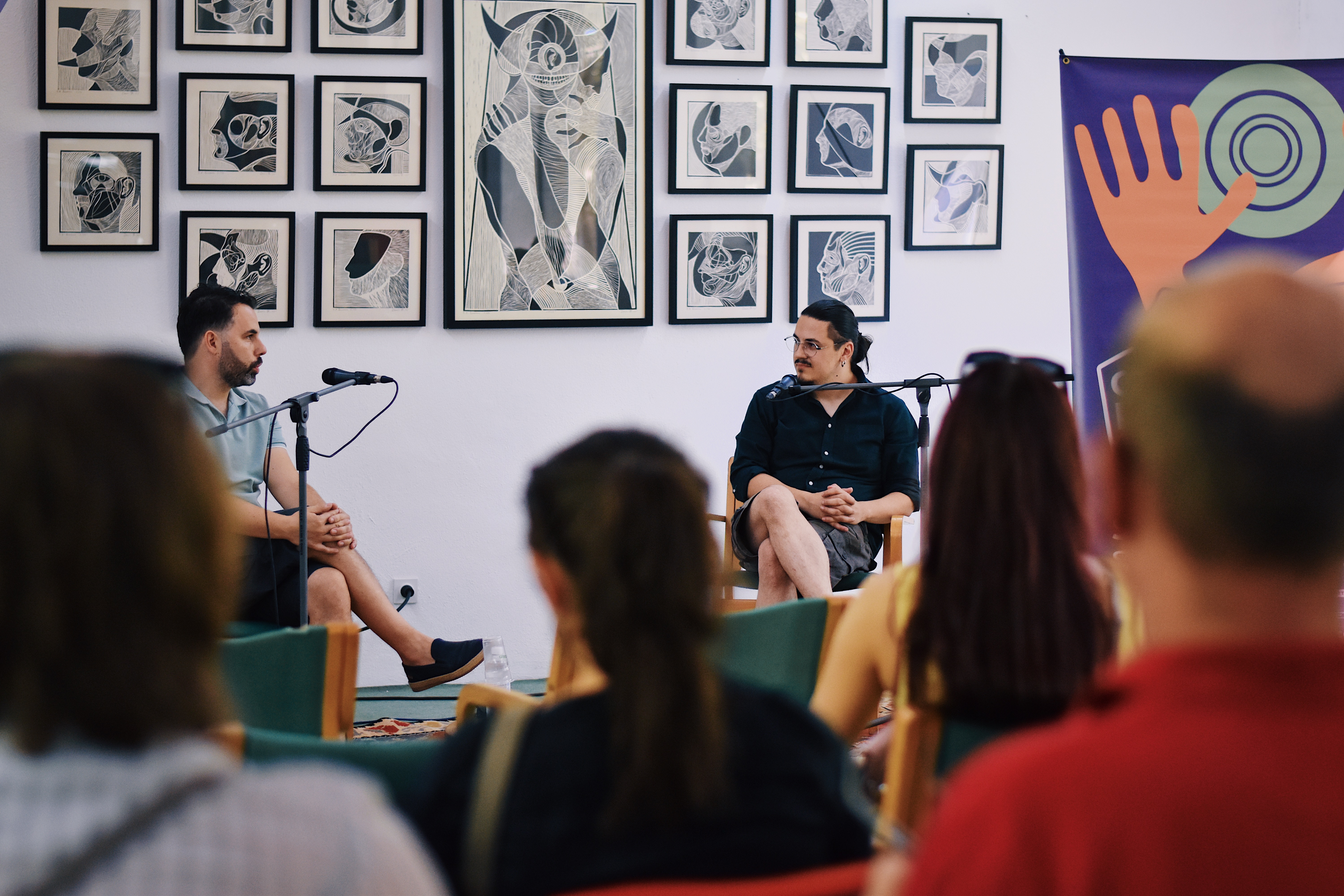
The cultural festival Slovo Gorčina has been held in Stolac and at the Radimlja necropolis of medieval stećak tombstones since 1971. It was established in response to the untimely death of the great Bosnian-Herzegovinian poet Mak Dizdar, who was born in Stolac, and has upheld a clear and enduring mission from its very beginnings: the promotion of Bosnia and Herzegovina’s cultural heritage.
As stated at the very first gatherings, everything created by human beings on this land deserves attention, preservation, and celebration.
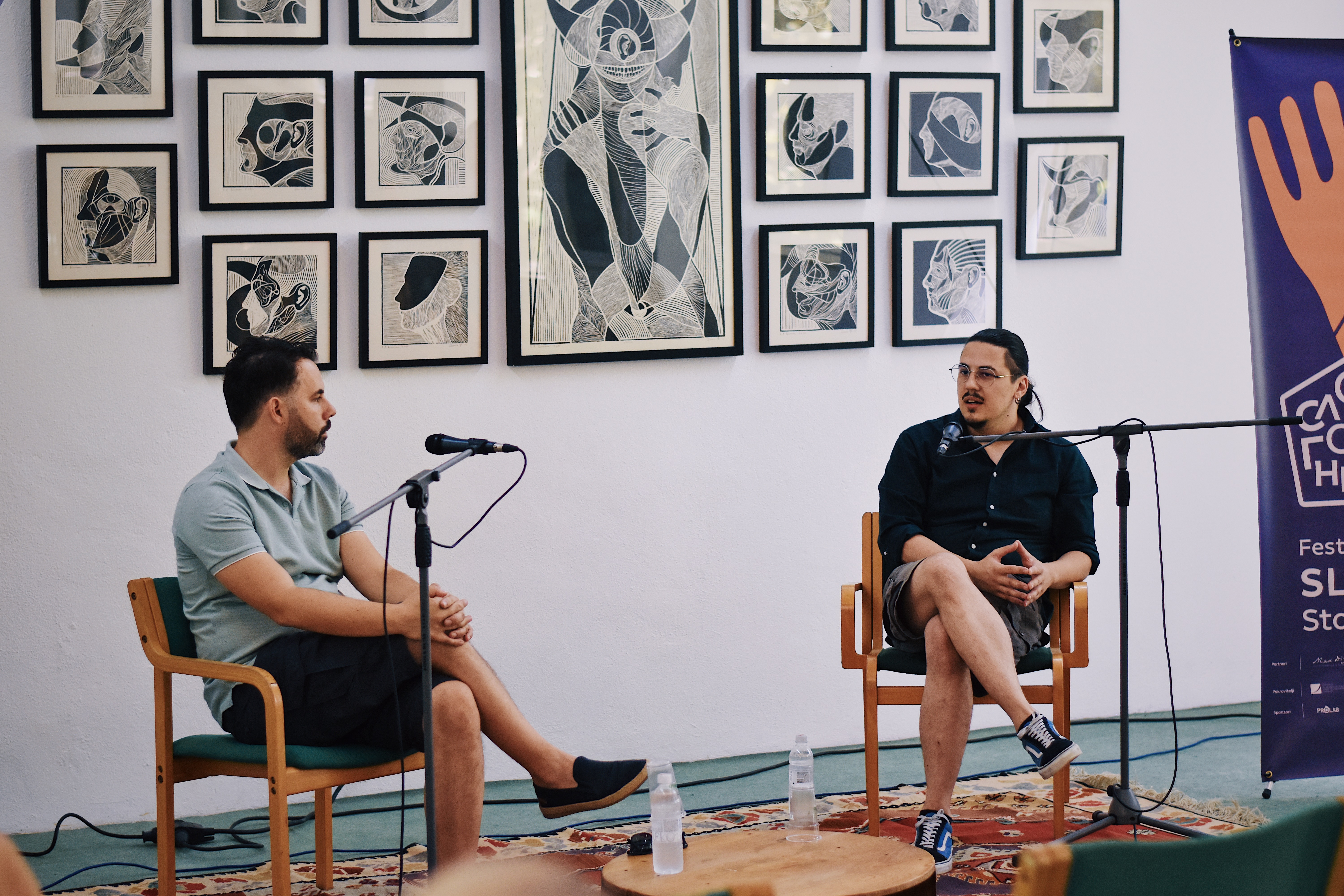
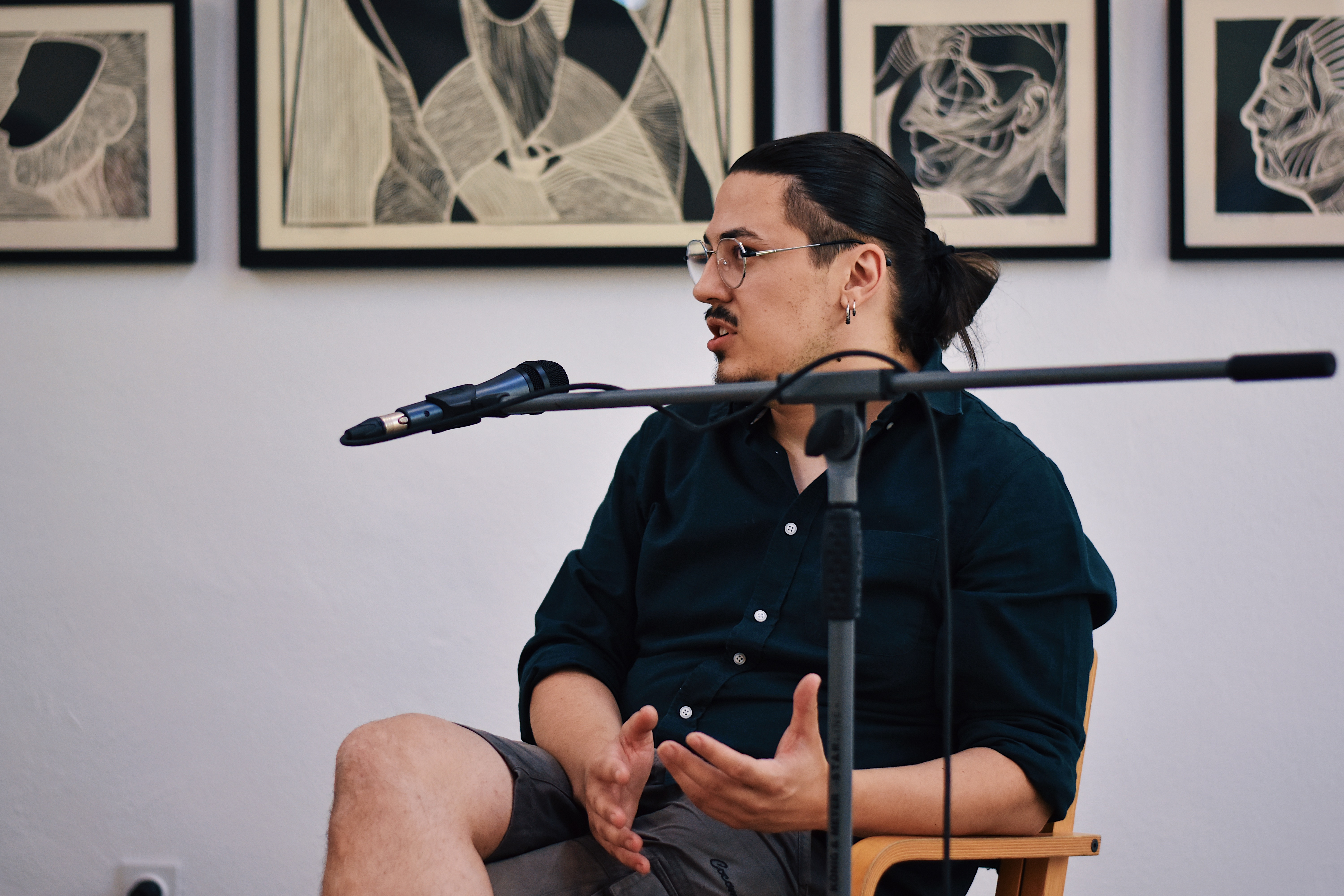
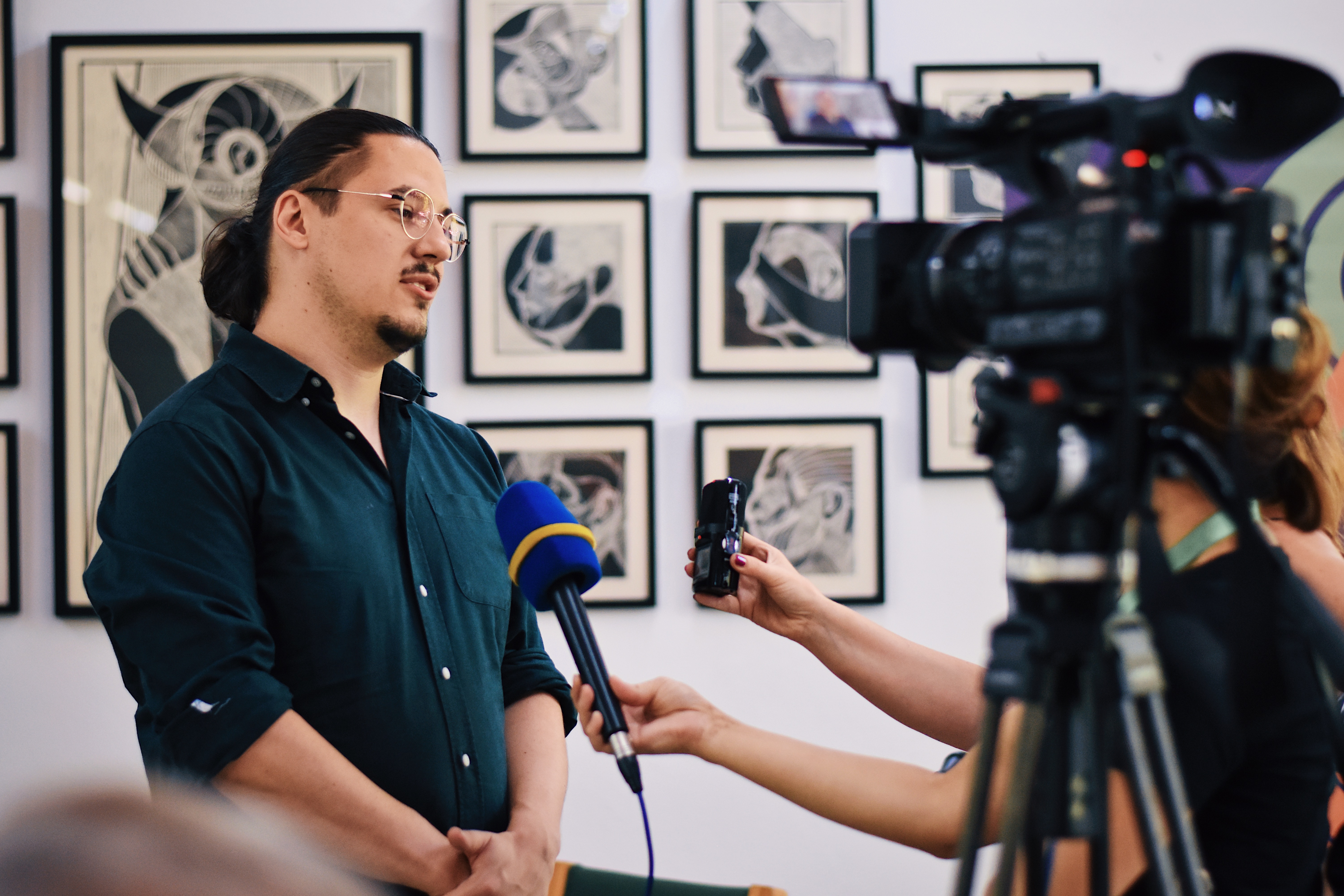
Gorčin Dizdar and guest artist Denis Haračić, 2023
The universal within the local and the individual, the marginalised artist, belonging, rejection, and social excess are all interconnected themes found in much of today’s art that meaningfully engages with social reality and contemporary artistic dynamics. The exhibition Reject by Denis Haračić, a young yet established visual artist, articulates precisely the state of the cultural and artistic scene in Bosnia and Herzegovina. Above all, the artist addresses the collective rejection of artists, set against extremely challenging social and existential circumstances. These circumstances—with a supposedly self-evident justification—demand that individuals subordinate their own values to “general” priorities, which, in reality, are not so general but rather collective and particular. Yet this alone tells us very little about the exhibition. Its most visible layer concerns the devaluation of the cultural and artistic scene, as well as the dethronement of artistic values capable of transforming and meaningfully influencing the communities in which they emerge.
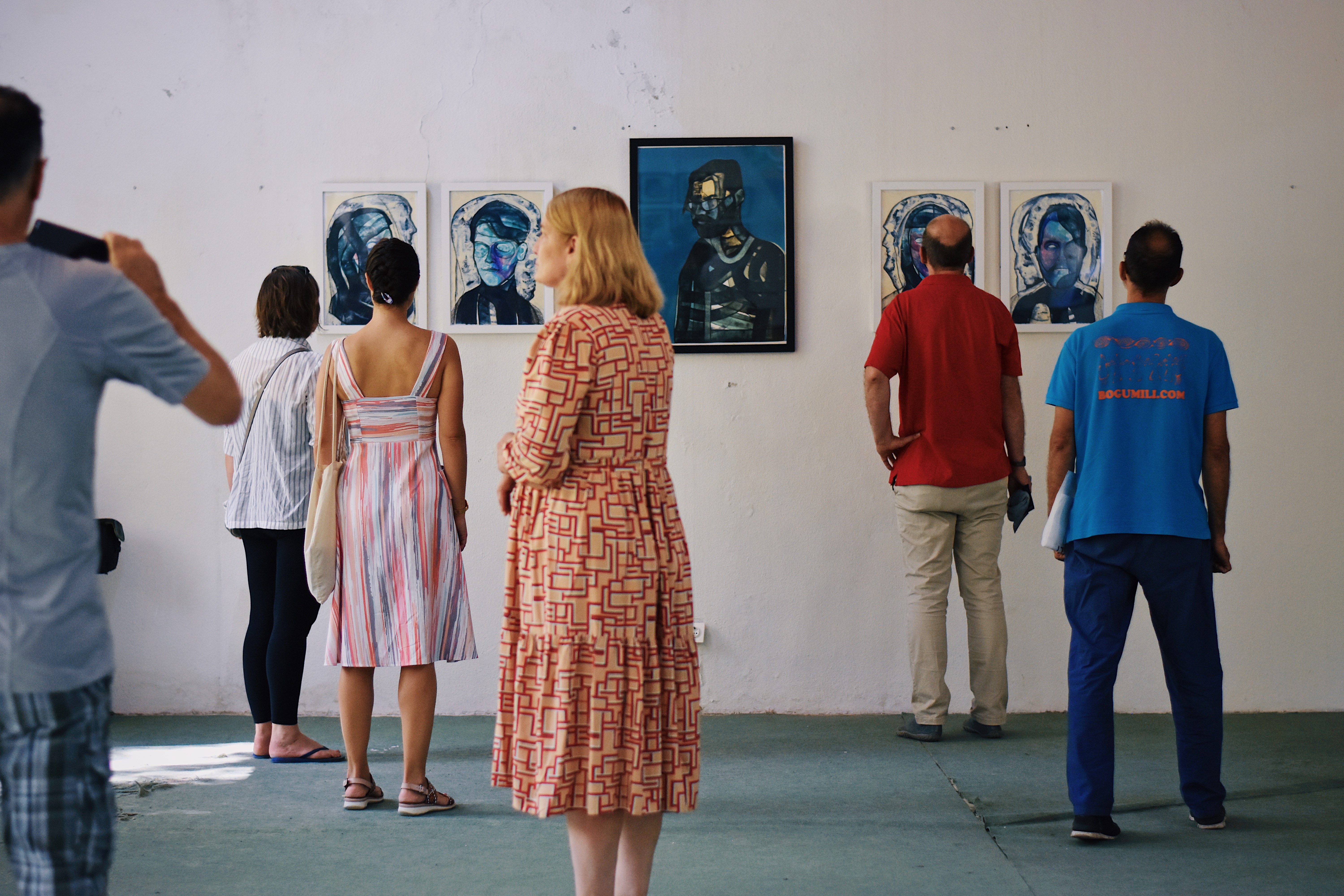
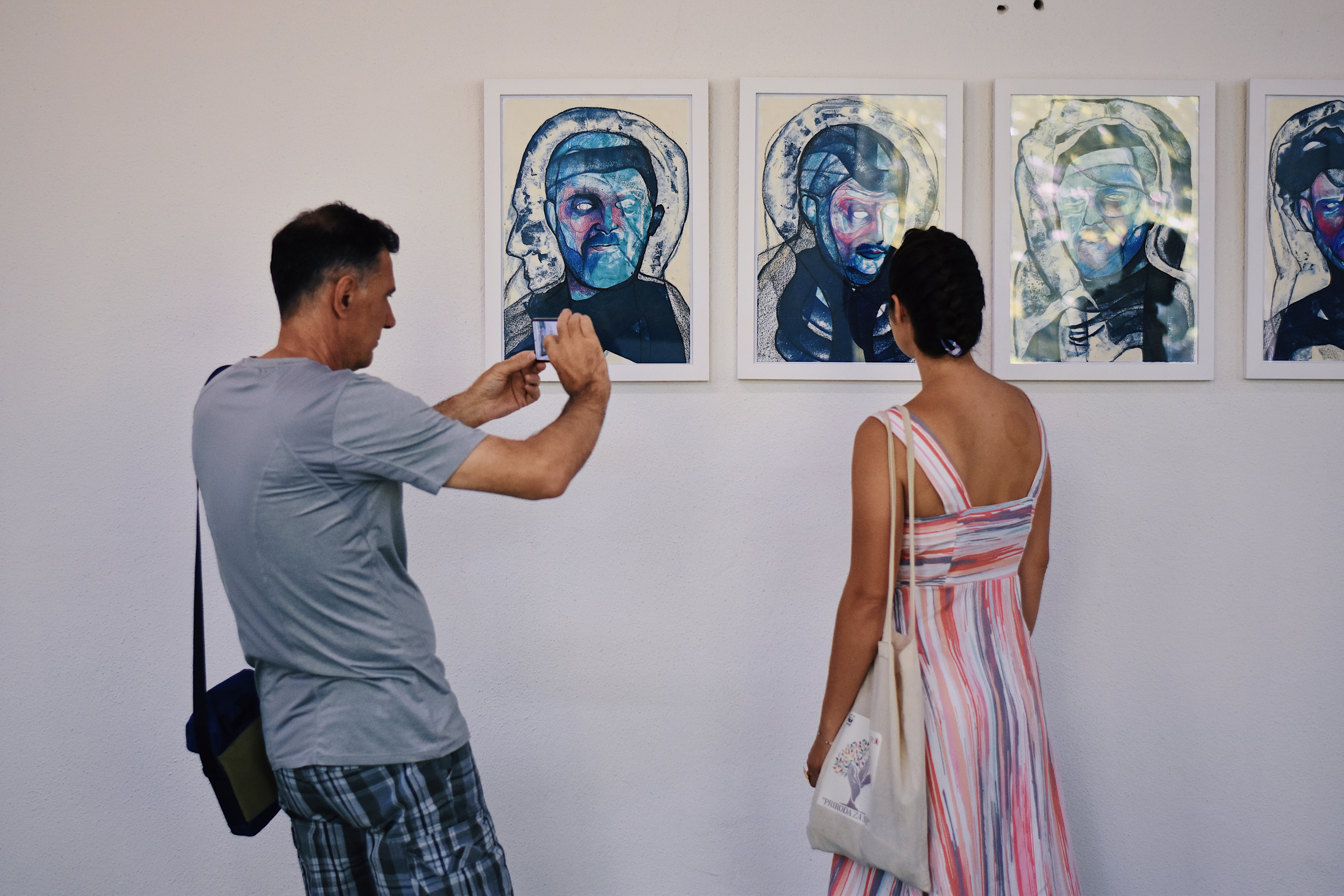
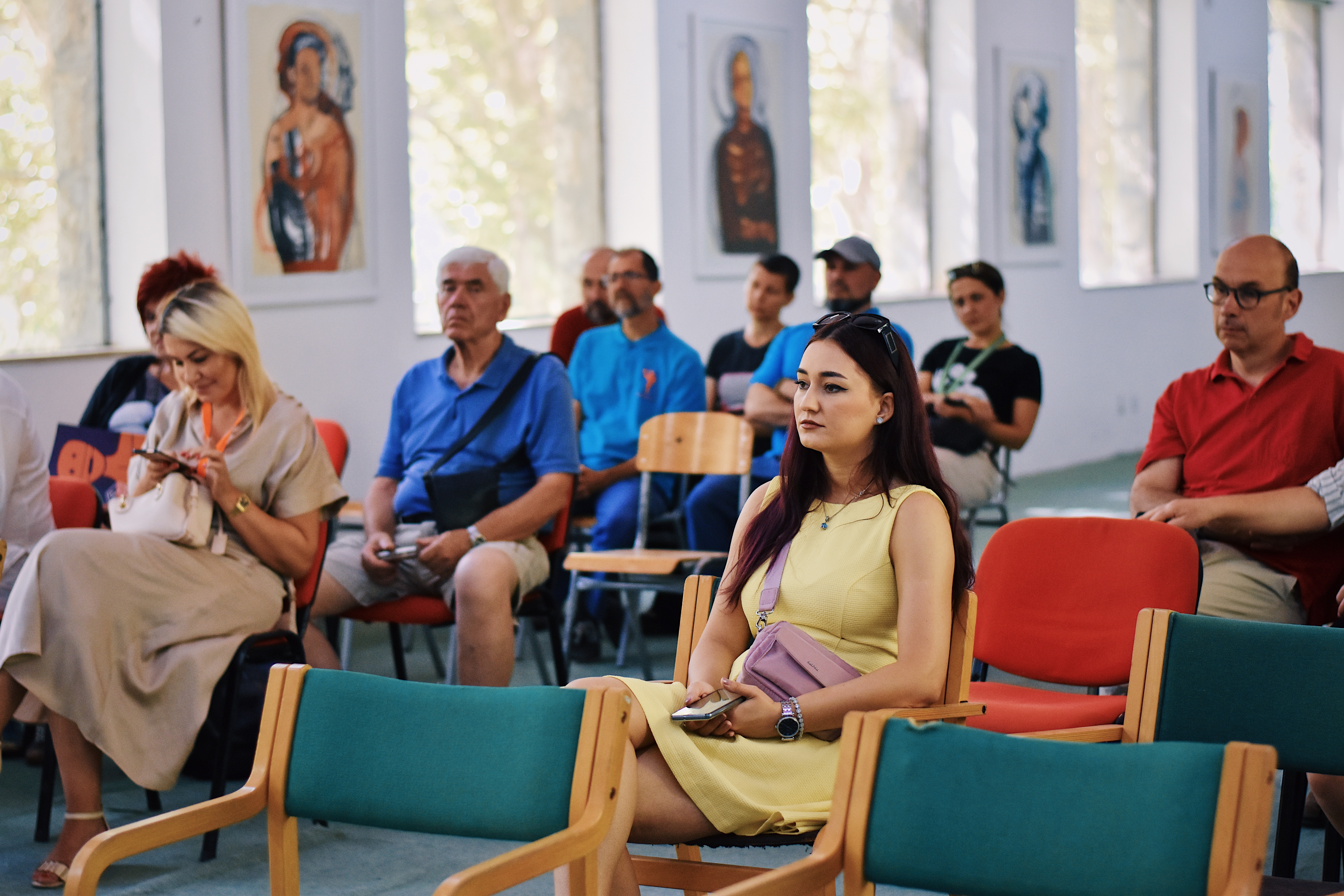
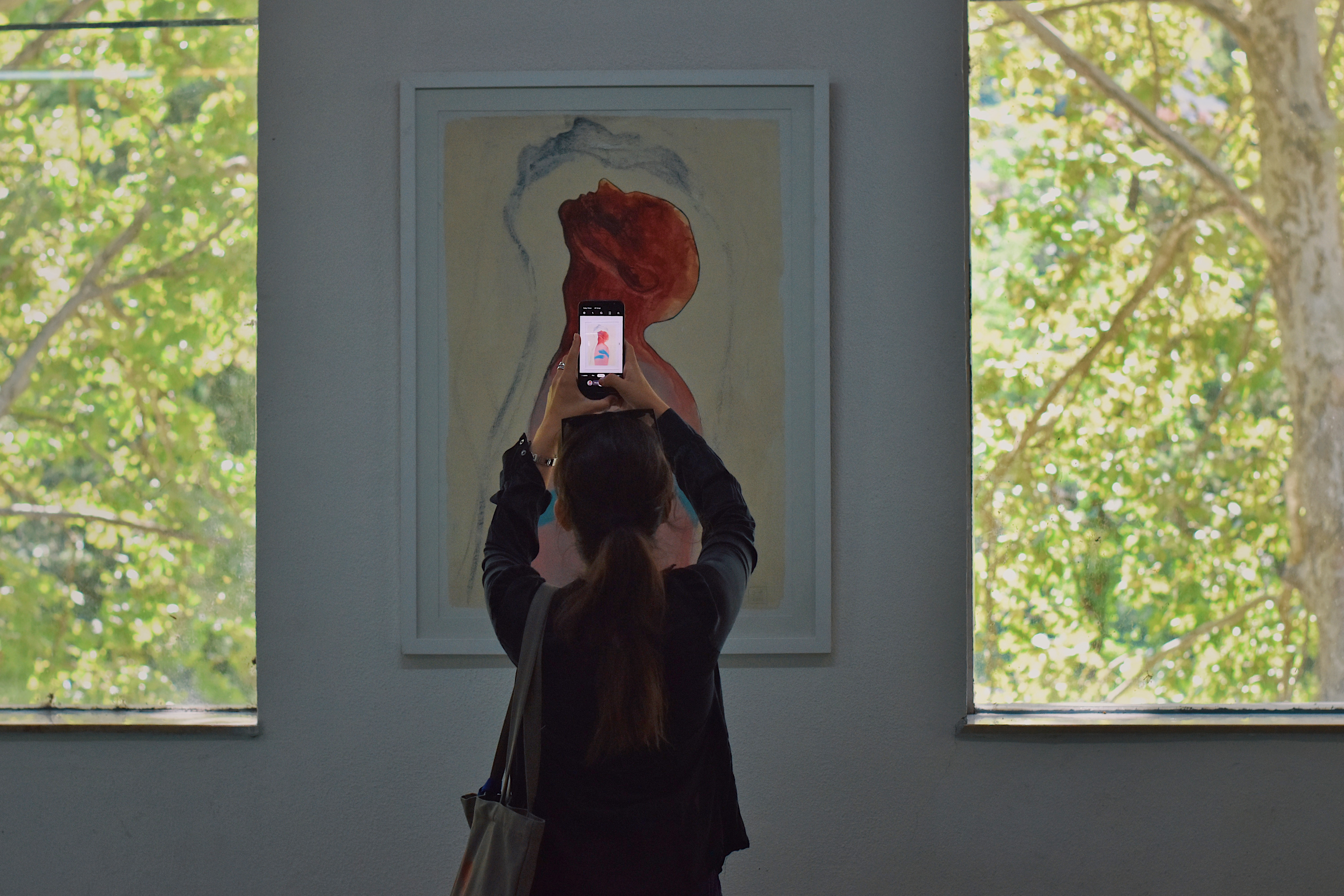
The question facing artists today is this: how does one survive the war of artistic alienation, if one has somehow managed to live through it in the first place? These and similar questions were discussed on the second day of the Slovo Gorčina festival, on Saturday, 29 July, when Reject was also presented to the public. The exhibition was first presented under the curatorial direction of Adna Muslija at the Historical Museum of Bosnia and Herzegovina, from December 2021 to January 2022, before being shown at the Trebinje Cultural Centre in the spring of the same year. The exhibition featured at this year’s Slovo Gorčina festival consists primarily of portraits of young Bosnian-Herzegovinian artists working in the fields of visual art, literature, and music. It is further complemented by an additional body of original work, the Mirror series, comprising approximately twenty different linocuts based on self-portraits.
The thematic and motivational framework within which Haračić explores the personal and collective artistic identities represented in his work constitutes a kind of re-inventory of those melancholic tropes of non-acceptance, of “life on the margins,” permeated by a sense of minority status as a natural—and, of course, largely passive and burdensome—condition of artistic life. Advocating for the recognition and thoughtful examination of these complexities, the artist explores the marginalised position of artists in our region, whose rules of engagement are far more complicated than the kitsch, idyllic image projected by our nostalgic memories, which evoke a new version of the myth of a golden age for emerging artists. At first glance, the work also concerns a redefinition of the artist’s own visual expression, as well as a reckoning with the position of marginalised individuals within their own “minority community,” governed by professional “defenders of minorities.”
Furthermore, this artist, set apart from others, cannot feel entirely free even within the embrace of their own culture, language, and state. There, despite possessing creative potential that they can neither relinquish nor wish to renounce, and despite their insights, knowledge, and the complex factors shaping their identity, they remain a lifelong “stranger.” This estrangement is fundamentally different from the one that pushed them to the margins in their “homeland,” intoxicated by the revival of majority tastes, although this difference does not necessarily make their situation any easier. In this spirit, the artist’s doubts and personal conflict with their place of origin are examined, revealing the contradictory feelings of simultaneous closeness and alienation, otherness and non-belonging. All these authentic individuals, unable to dissolve effortlessly into collective sameness and uniformity, become part of Haračić’s re-evaluation of personal and generational aspirations and achievements.
In formal and visual terms, Haračić creates a dense and complex artistic and compositional structure. Although traditional printmaking techniques have been replaced by monotype and more experimental explorations of painting and drawing, his visual language reveals a certain degree of artistic maturity. Transparent layers of colour, rough gestural contours, and framing lend the overall composition contrasting vitality and rhythmic variety. Through interwoven lines, the rather chaotic microcosm of the individuals portrayed expresses, through its accumulative movement and its emergence from successive layers, a sense of individual overload. Through layers and accumulations of forms, the work seeks to discover meaning, order within disorder, and traces of being and meaning against a background of nothingness. Will everything become lost and disappear in this inner chaos, or will some meaning emerge from the abundance that surges forth? Do the forms sink and vanish into the mist that engulfs them, or are they born from it? The artist leaves these questions open for the viewer to contemplate. One of the principal carriers and components of the work’s energetic charge is colour: colour as matter in process and as a psychological means of expression. In this instance, its warmth, intensity, fierceness, and aggressively explosive character are no coincidence.
The art of the “outsider” is a well-known and compelling concept that has been extensively explored, presented, and subsequently reinterpreted. However, what distinguishes Haračić’s work from similar artistic variations on the same subject is the relative flexibility of his definition of the rejected artist. In general, the category of unaccepted artists is defined through work that is repellent, even intense and obsessive, created by individuals who remain unaware of, or indifferent to, normative artistic standards. Yet the reasons behind the art itself, and its interpretation, lie deep within each of the artists portrayed. In this way, Denis Haračić’s exhibition offers a perspective on both personal and collective creativity, while reminding the viewer that this creativity has inevitably come at a certain cost.